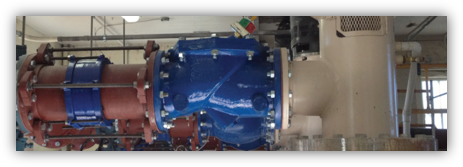
At Val-Matic, we know that reliable waterworks infrastructure depends on more than just the valve itself. T he connections between system components matter just as much. One of the most important of those connections is the flange. Flanged joints help utilities and contractors assemble, maintain, and service piping systems with greater confidence, especially in applications where long-term performance and accessibility are essential.
 A flange connection is a mechanical joint where two pipe or valve ends are bolted together, creating a secure connection that can also be disassembled when future maintenance is needed. In the waterworks industry, flanged connections are especially common on larger valves and in systems where installation efficiency, serviceability, and dependable sealing are critical. Compared with direct-buried or more permanen
 t joint types, flanges make it easier to remove, replace, or inspect components over time.
Flanged valves are used across a wide range of waterworks applications, including distribution line valves, treatment plant piping, booster stations, pump connections, large meter installations, water towers, and reservoir piping.
They are especially valuable anywhere future removal, or maintenance access is expected. When properly installed, flanged connections offer high mechanical strength, repeatable installation, reduced risk of joint failure, and long service life with minimal maintenance.
Industry standards play a major role in helping engineers, utilities, and manufacturers specify flanged components correctly. Organizations such as the American Society of Mechanical Engineers (ASME) and the American Water Works Association (AWWA) provide the framework for flange dimensions, pressure-temperature guidance, materials, manufacturing practices, and testing requirements (as shown below). These standards support compatibility across components and manufacturers while helping ensure safe, reliable performance in pressurized water systems.
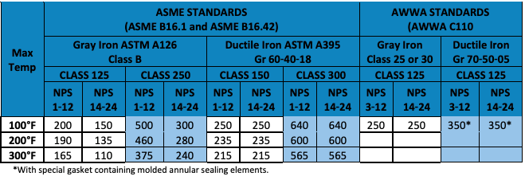
Waterworks flanges are commonly manufactured in materials such as cast iron, ductile iron, carbon steel, and stainless-steel. Each material offers different performance advantages depending on pressure requirements, corrosion concerns, and installation conditions. Flange classes such as 125, 150, 250, and 300 are widely recognized in the industry, but these designations are often misunderstood. Proper flange selection requires more than matching a class number. It also involves understanding temperature conditions, bolt patterns, and the exact size and standard associated with the connection. In many cases, class compatibility and drilling patterns must also be considered to avoid costly field issues.
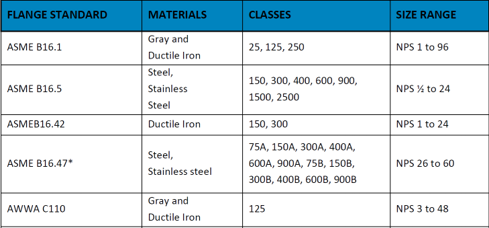
At Val-Matic, we believe understanding flange design is essential to building dependable waterworks systems. Flanges are not just connection points. They influence maintainability, sealing performance, compatibility, and long-term reliability across the system. By understanding how flange standards, materials, classes, and sizes work together, utilities and contractors can make better specification decisions, reduce installation problems, and help ensure strong performance over the life of the pipeline.
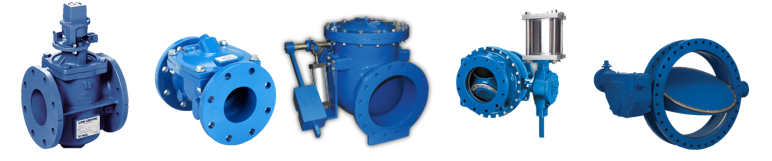
Whether the application involves treatment plants, distribution systems, pump stations, or reservoirs, choosing the r ight flange configuration can help protect performance and simplify maintenance for years to come. For waterworks professionals, a strong understanding of valve flanges is not just helpful. It is a key part of designing and operating resilient infrastructure. Learn more about this solution by contacting us or taking the ‘Valve Flanges for Waterworks Service’ VMU course.